Thursday, February 22, 2007

Tuna fishing


On a recent trip to Port Lincoln for a patient, I had occasion to fly over a bunch of these rings on the water. I had only recently become aware of them and it was interesting to see modern tuna fishing in action. Because the local tuna stocks were in decline several years ago, and there were strong indications that the fishing was no longer sustainable, some clever folks got together to set up these floating nets and stocking them with tuna. They feed them three times a day and monitor their health for the entire time until they are big enough to "harvest". With the price of tuna being around $25.00 a kilo in the market, I guess it must be working for them.

Summer storms


On a recent trip to Marree in the far north, I had to weave in and out amongst a few thunderstorms. This picture of the weather radar shows part of the action, and it is one of only two photos I managed to get without blurring (I took about a dozen but there were so many bumps that most were of no use). Anyway, the magenta and red areas are large storm cells, with heavy rain and turbulence. The lightning flash indicates electrical activity, and at one stage I had these symbols all over the screen too. Funnily enough, by the time I got to Marree, there was no rain falling and the wind was no problem. However, there were large areas of raised dust as seen in the other photos.

Tuesday, February 06, 2007

More dust.....


I had a patient to pick up yesterday from "Prominent Hill" - just west of Coober Pedy. I must say that I didn't see any hills, but they have an open cut mine there so it may be that the hill is now gone..

Anyway on arrival, as I flew downwind I noticed a HUGE dust devil working its way towards the runway. It eventually went right across, and as I'd widened my circuit deliberately to avoid it, there weren't any problems. I didn't have the opportunity at that time to get a photo, but about fifteen minutes later I snapped a photo of a much smaller one doing the same thing. At that time I saw about four in the area.

Also interesting to note that the mine has HUGE tipper trucks for moving the gravel around and there is a track that goes past the end of the runway. As I approached, there was one waiting to cross under my approach path. I'm glad he waited because he's probably 40 feet high and would definitely have caused some consternation otherwise.

Sunday, January 14, 2007

More Dust Storms


The other day I had a patient to pick up from Ceduna (about 1 hour west of Port Augusta) and the conditions at home were pretty horrible. Temperature was about 104 F and we had strong winds and poor visibility because of dust. The photo here was taken about half way to Ceduna as we cruised at 20,000 feet. The dust went to over 10,000 feet and as you can see, it made it impossible to see anything on the ground. Fortunately, we fly with some very sophisticated navigation equipment so this wasn't a real problem, but it looked interesting all the same.

Tuesday, December 26, 2006

The PC12


Just another couple of photos of the PC12. Not a particularly pretty aeroplane, but oh so capable!!!!

Thursday, December 07, 2006

Outback vehicles


It stands to reason that in the outback, vehicles tend to get a very harsh workout, and sometimes don't necessarily get the kind of loving attention that they would in suburbia.... This is an interesting vehicle from Glendambo. As you can see the windscreen wipers have failed and been removed long ago, so now when (if) it rains, the driver has to resort to a more "manual" system.

Also note his refrigerator in the back. I checked to see that it wasn't plugged in and operating. I thought this chap had a drinking problem, but may have solved the difficulty of keeping his tinnies cold! No such luck - he was just transporting it to another house in the local area.

Dust cloud


I flew a clinic run yesterday up to William Creek (just north of the centre of South Australia. On the way, cruising at 23,000 feet, we noticed that there was a very large dust cloud covering the entire area and extending up to 10,000 feet. This made for an interesting approach to William Creek, which is just a small airstrip with a pub and two or three houses next to it. The airstrip is only gravel and sand, and is the same colour as the surrounding terrain - mostly red - so it is sometimes a little difficult to spot from a distance.

Yesterday, we flew right over it at 500 feet and still missed seeing it initially! I had to come back around and overfly the strip a little lower to be able to spot it, and then circle to land, keeping it in sight. This of course gave us a VERY tight circuit and when I got to final, I could see the threshold of the runway from 200 feet, but not the other end! Not an approach for the faint of heart.... We almost had to go home without landing, but managed to get down. Whis photo was taken just after we had shut down and you can see the conditions for yourself. When we left two hours later, it had improved somewhat, but still wasn't good enough to be a normal (visual) flight. We always fly on instrument flight plans so it was ok and legal, but that doesn't mean it was necessarily pleasant.

Sunday, November 05, 2006

Aircraft equipment


Here is the inside of the PC12. The pictures show the stretchers and equipment racks in the rear of the aircraft. Note that the stretchers are actually on dollies so they can be wheeled around at will. The floor has been specially designed to be flat and easy to clean. If any blood gets between the joints, it MUST be cleaned properly and as soon as possible because it is reportedly very corrosive. Never knew that did you? I certainly didn't.

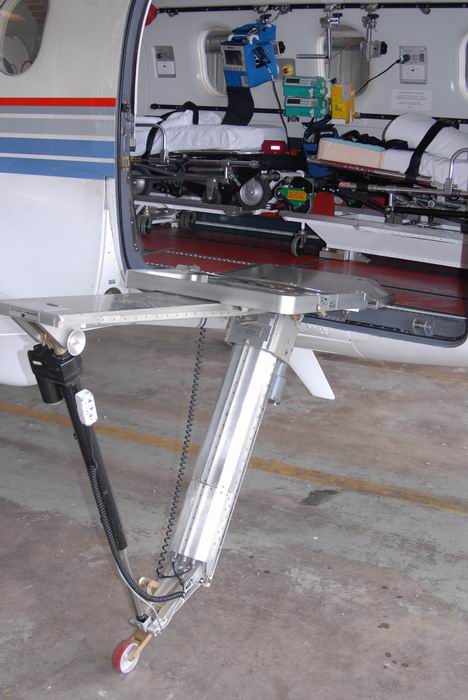
The third photo shows the stretcher loading device. Basically this is an electrically driven (by worm gear) platform that allows us to raise and lower the stretcher and patient without all the manhandling that would normally be needed. This saves our backs, and reduces the opportunity for further patient injury etc. Great little system, though very expensive as it is properly certified for use in aircraft and of course is made of expensive components, milled from solid blocks of metal. It has to be examined to be appreciated.

No longer glowing....


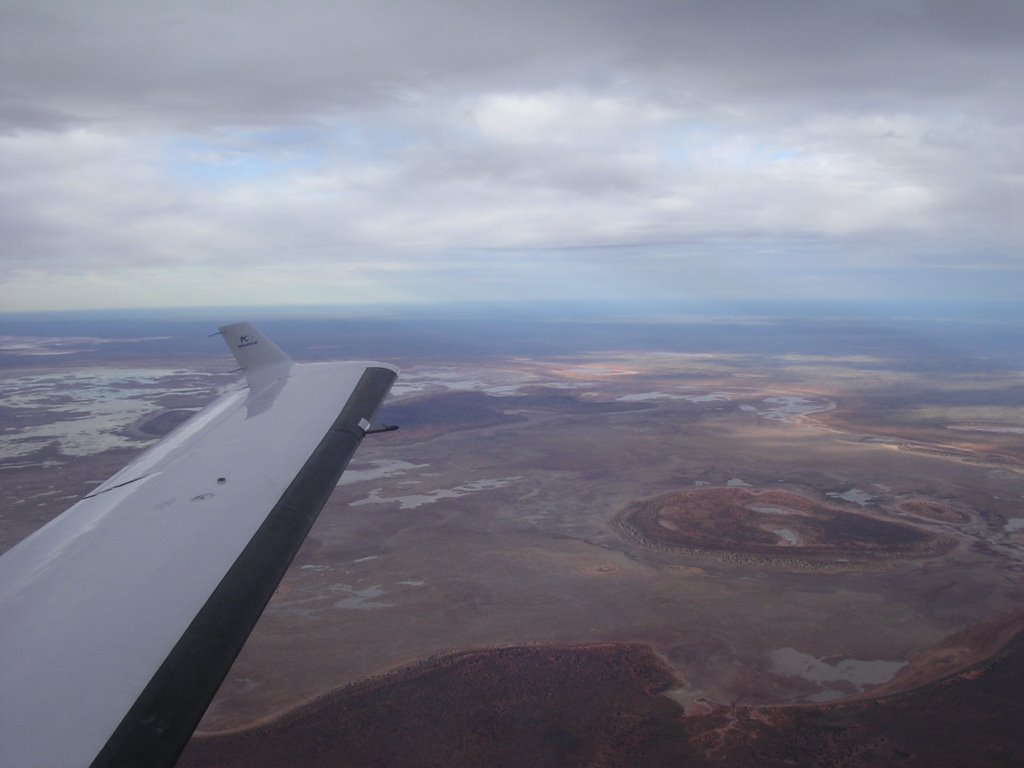
This is one of the salt lakes just out of Maralinga in central South Australia. In the 50's, this was the scene of the A-Bomb tests, and for a long time, nobody was allowed in the area for fear of radiation poisoning.

Now, you wouldn't know anything had happened there.

Taking off out of Mintabie


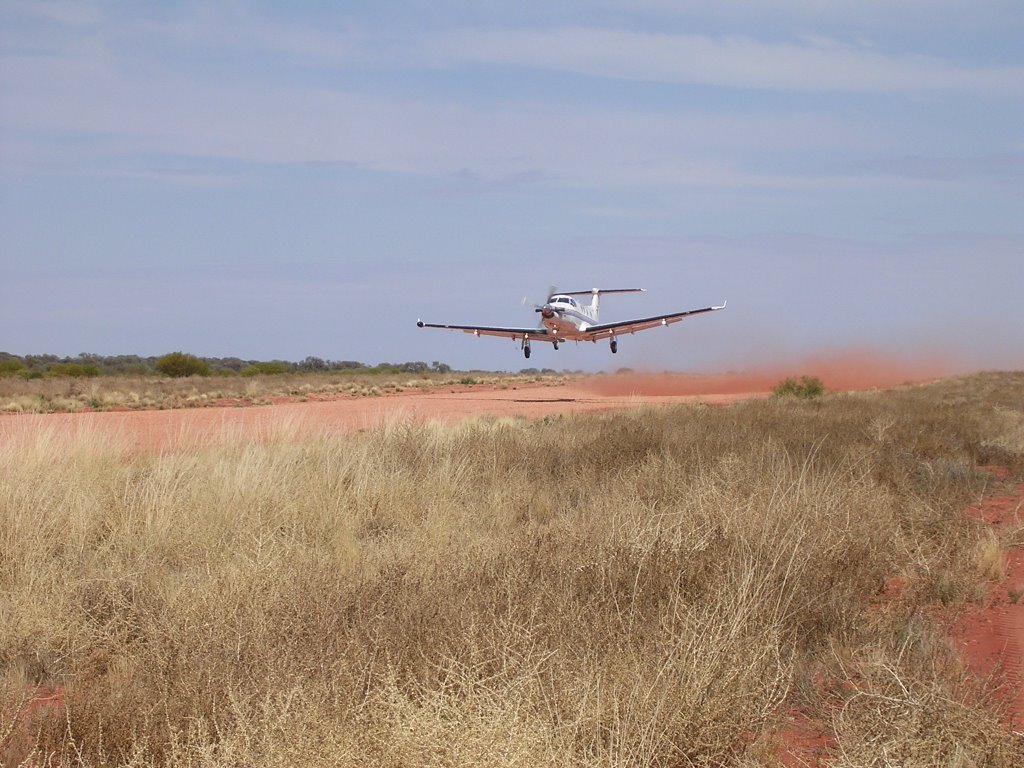
Just a quick photo of a takeoff from the airstrip at Mintabie after a clinic. As you can see, there is plenty of red dust in the area, and it can be quite a problem, depending on how much wind there is at the time and which way you turn. You don't want to turn into your own dust unless you have to.....

Saturday, November 04, 2006

Scenic Views


This is the northern part of the Flinders Ranges, on the way into Balcanoona airstrip for a clinic. We only saw two people that day (one was VERY pregnant), but it can sometimes be quite busy I'm told. This is the only regular medical attention folks in these areas can get.

Outback airstrips


Just a little indicator of some of the airstrips we need to use occasionally. This is the airstrip at Dulkaninna homestead. Check out the rocks! This is called Gibber and is the common stone found around much of the area. As you can see, it pretty much covers everything, and there's not much feed for the animals in the area. Also a bit tough on props and engines....

Dental work in the outback


Just thought you'd all like to see how the dentist works in the outback.... this is at a bush airstrip north east of Port Augusta, called Blinman. The patient is having some adjustments made to his upper plate, and the dentist is using, of all things, MY LEATHERMAN! Needless to say, the work was somewhat unplanned, with the dentist only there originally to observe and talk with locals, but the opportunity presented itself, and I couldn't resist getting a photo or three.

Sunday, October 29, 2006

How's this for cruising?


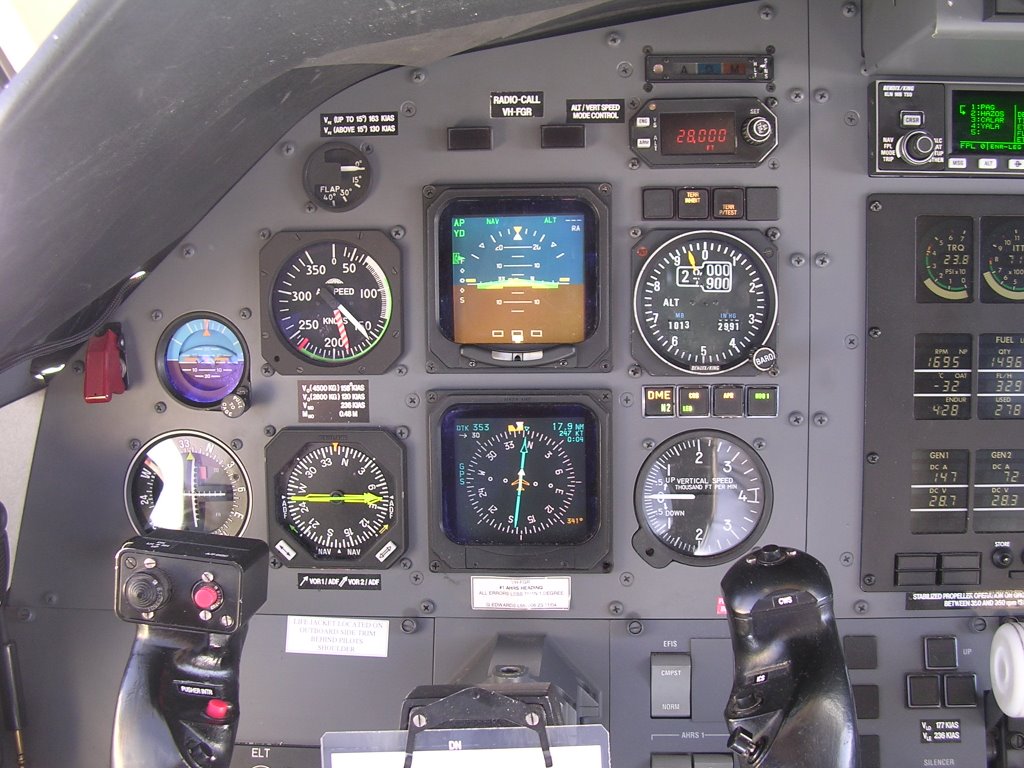
For the pilots and interested folks out there, this photo was taken on my clinic run to Marla last week. Cruising at 28,000 feet with a groundspeed of 247 Knots - way to go!!!!

Thursday, October 19, 2006

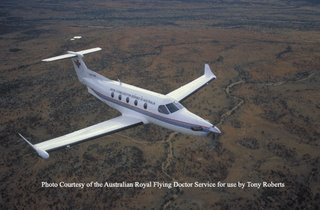
The Pilatus PC12


Well, here's the Pilatus PC12. It's my job to fly this wonderful aeroplane and I'm having a great time...

It carries two stretcher patients and up to two sitting patients or escorts, along with the Flight Nurse and of course the pilot (me). We generally only have one or two patients at any one time, and a doctor rarely accompanies us, so it is basically up to me to fly and the nurse to look after what happens in the rear of the aircraft.

We have some excitement at times, operating in all kinds of weather, day or night, and into some pretty inhospitable terrain. However, many of the flights are kind of routine in nature, with hospital transfers being quite common. Occasional emergency flights also see us retrieving patients from all around South Australia and bringing them back to Adelaide or Port Augusta. The kind of emergencies can vary from car accidents, falls, burns and bites, to pregnancies and mental problems. We sometimes carry police escorts to keep the "not so pleasant" patients under control.

On long flights we cruise around 24-28,000' but sometimes we have to stay low (14,000') to keep the cabin altitude at sea level. This is typical for patients who have head injuries for example, where any change in altitude could be VERY dangerous for them.

We can cover a long distance in a very short time, but it is really for trips across the gulf or outback where we save the most time for the patient. If we retrieve a patient from Port Lincoln to Adelaide, it takes around 20 minutes, but if they had to drive, it would be around 7 hours by ambulance! Of course in some cases, the patient wouldn't survive that long. Bringing back a patient from Yalata takes about an hour and a half by air, but probably around 15 hours by road. Again, the aeroplane is often the only practical way to get the job done.